
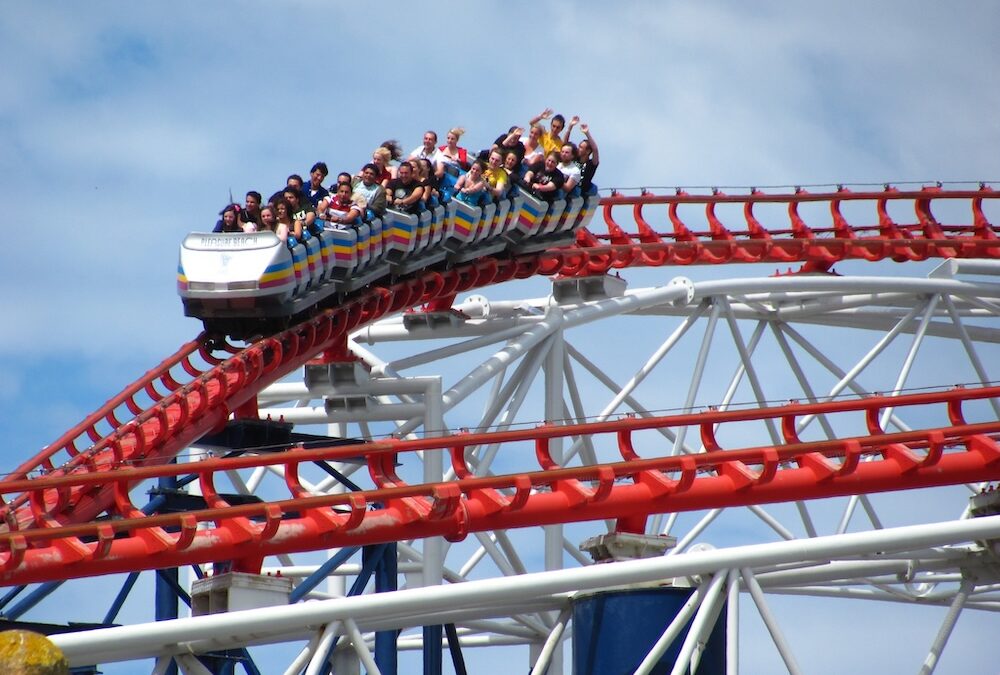

A hyper coaster is generally defined as a roller coaster with a height of 200 feet (61 metres) or more. Instead of focusing on inversions, hyper coasters tend to favour large drops and airtime.
Magnum XL-200 at Cedar Point in Sandusky, Ohio is widely regarded* to be the first ‘Hyper Coaster’ – a term devised by the park’s marketing team to distinguish it from everything that had come before. It opened on 6th May 1989 and was designed by Arrow Dynamics, the successor to Arrow Development who built the first steel roller coaster, the Matterhorn Bobsleds at Disneyland.
The ‘Hyper Coaster’ label was adopted by Arrow as the name for the product line that had been utilised for Magnum, incorporating trains made up of six-seater cars utilising an updated track design, however many components were iterations on the Arrow mine trains of the 1960s.
Arrow would build four^ Hyper Coaster model rides in total, with Magnum in 1989 and three others (including the Big One) in 1994. Each was designed by Ron Toomer, who also served as the President of Arrow Dynamics.
Magnum XL-200 (1989)
Cedar Point, Ohio USA
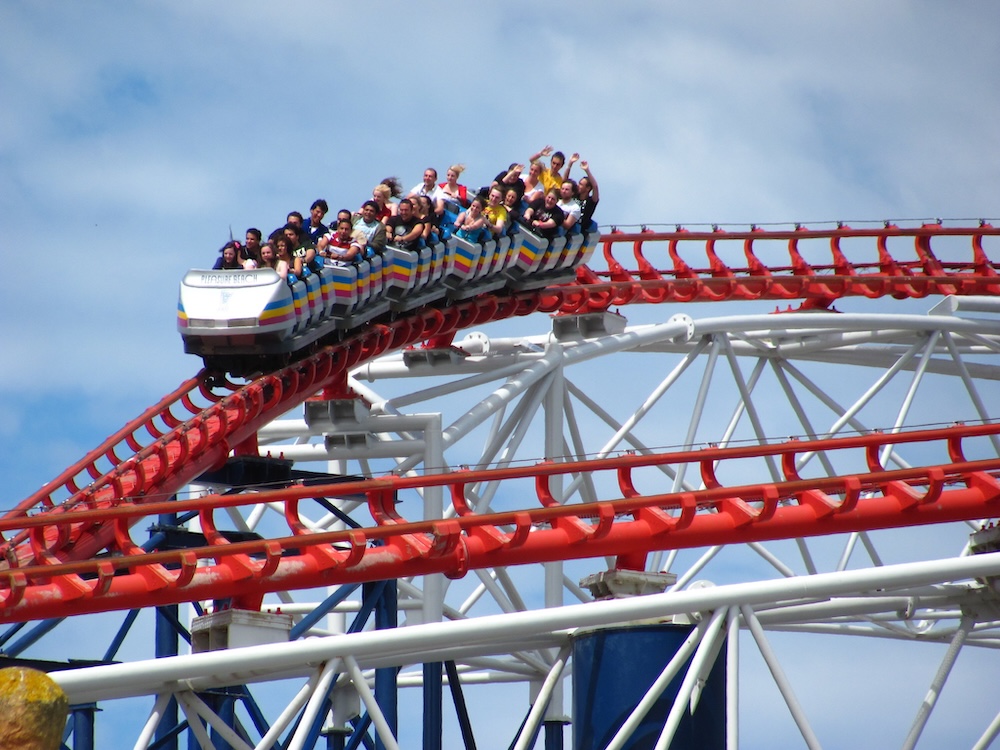
The OG ride, located on the shores of Lake Erie on the Cedar Point peninsula, the impact of Magnum XL-200 on the amusement park industry cannot be overstated. It was the ride that proved to be the the first shot in what became known as the ‘coaster wars’ where parks around the world vied to outdo each other by building taller and faster rides. Packed with airtime and a spectacular setting, Magnum is often regarded as the best in the class.
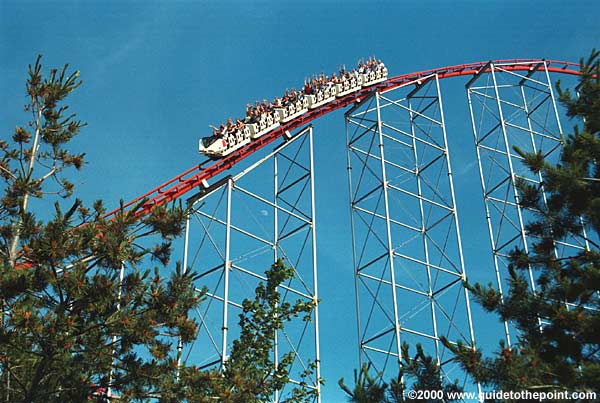
(Pepsi Max) Big One (1994)
Blackpool Pleasure Beach
Perched precariously above the Irish Sea and a raft of other rides and attractions, the Big One held the crown of the UK’s tallest roller coaster for thirty years from its opening in May 1994 until the opening of Thorpe Park’s Hyperia in 2024. The massive structure was designed to look iconic for miles, remaining tall for a significant portion of the ride’s layout.
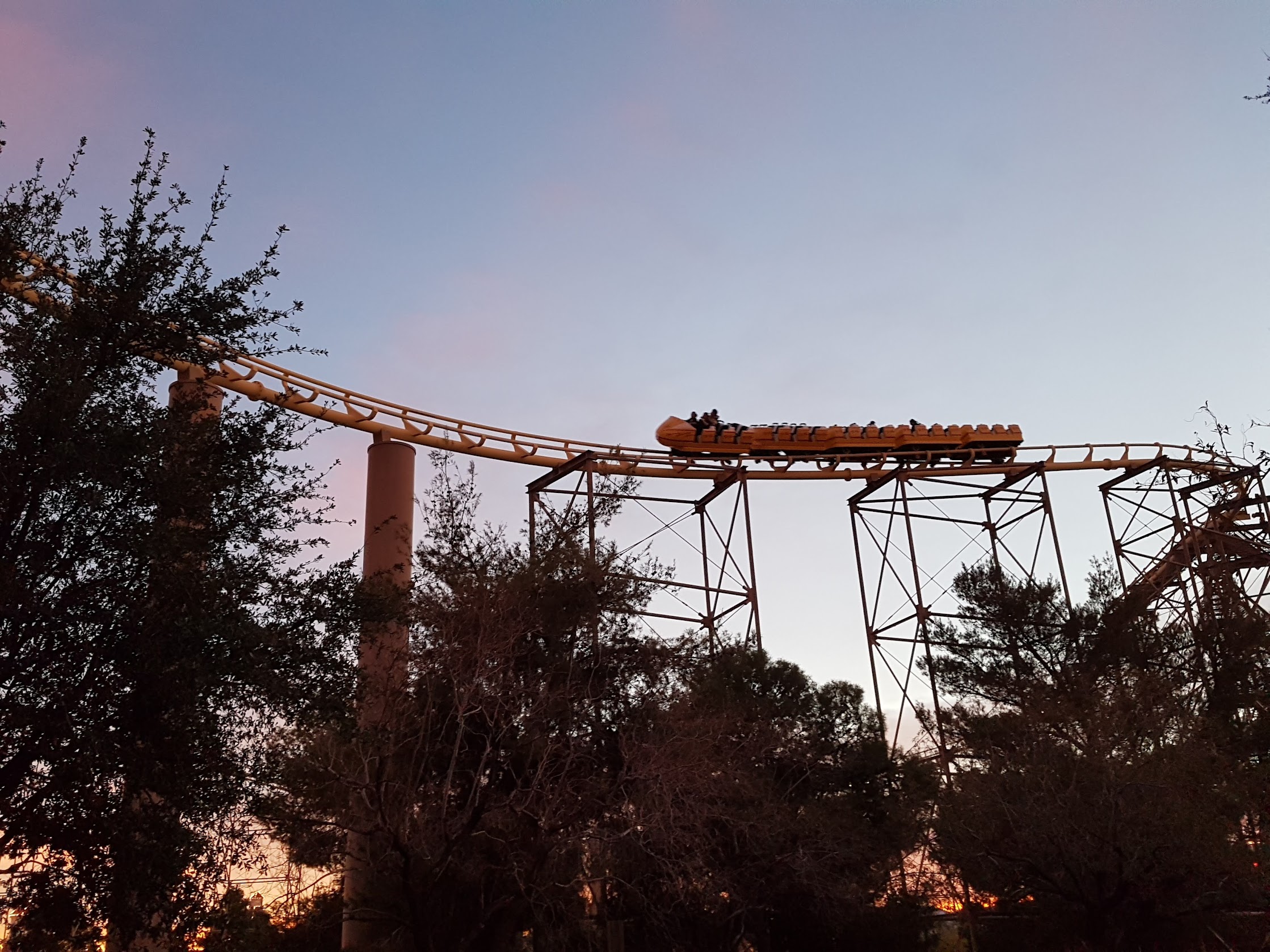
Desperado (1994)
Buffalo Bills, Primm, Nevada, USA
Located on the border between Nevada and California, Desperado serves as the icon for the Buffalo Bills casino. It is an extremely photogenic ride, starting and ending with the casino building and interacting with an Arrow built log flume. The ride features a semi-twisted layout following a huge first drop into a tunnel. Although it still stands, the ride has not operated since 2019 and the casino closed in 2025.
Titan (later ‘Titan V’ and ‘Titan Max’) (1994)
Space World in Kitakyushu, Japan
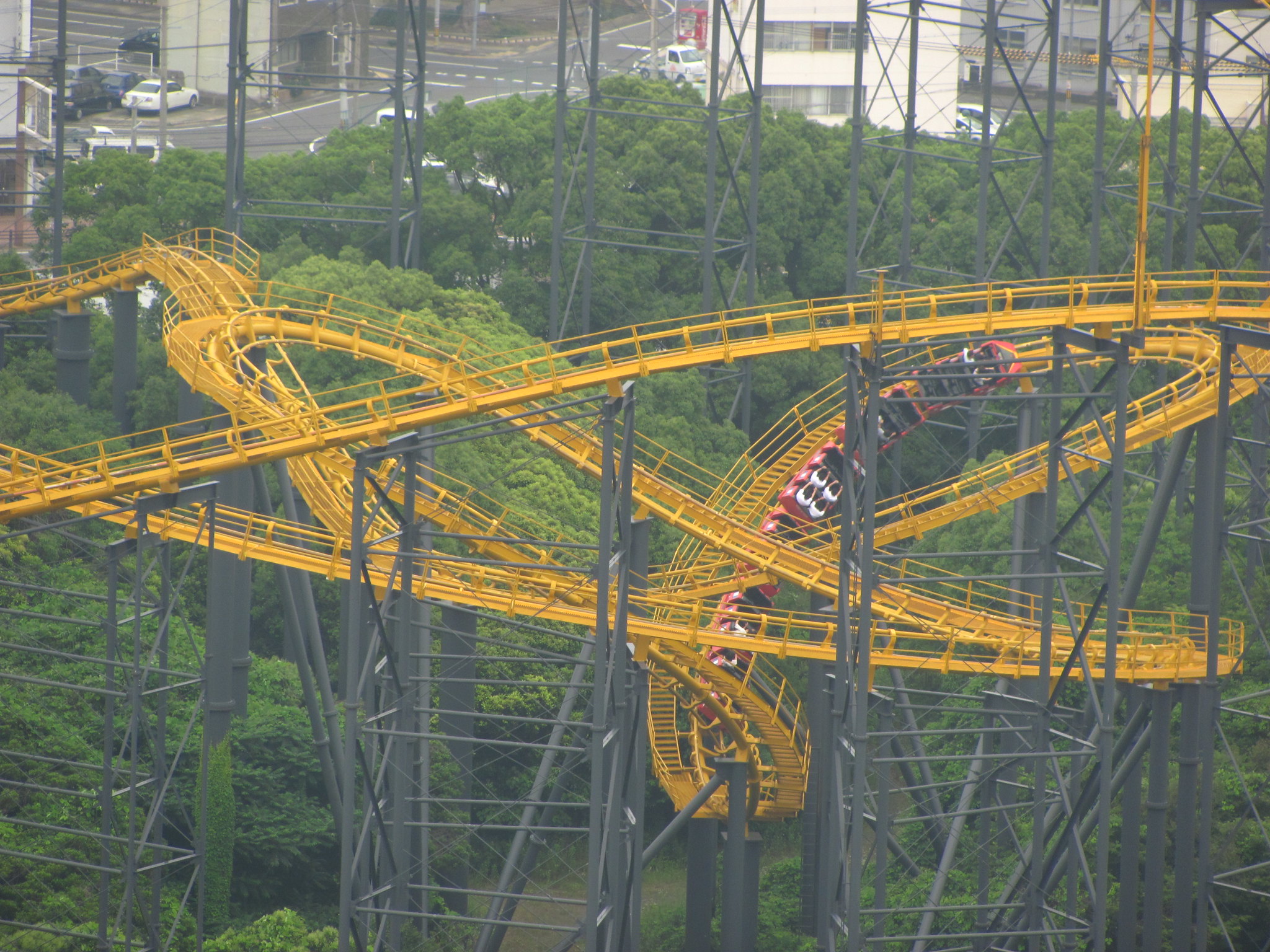
Titan was a curious ride and due to geography, was perhaps the least well known and accessible of the four rides. The ride’s first big drop was similar to Magnum, but the rest of the layout was quite twisted and not particularly fast. The ride closed with the rest of the park in 2018.
(Note – we didn’t ride Titan until after the original Arrow trains had been replaced by new rolling stock, built by S&S).
At the time of writing, seventy six roller coasters have topped 200ft. In the year 2000, Cedar Point once again upped the ante with the introduction of Millennium Force and introduced the Giga Coaster (300ft) age. As roller coasters continue to go higher and faster, it’s worth remembering that the four Arrow Hypers were truly pioneering rides on the way.
Notes
*Moonsault Scramble opened at Fuji-Q Highland in 1983 and reached a height of around 230ft. However, it was a shuttle roller coaster (like the Revolution) and is not generally regarded as a ‘true’ hyper coaster.
^Steel Phantom, also built by Arrow was a mega looper with a 200ft drop, however it was not a hyper coaster model.